

I Spent 10 Years Chasing Money—Here's What It Taught Me
I remember standing in the hallway at work, listening to my coworkers laugh about their weekend plans, and feeling completely unreachable. I'd just had one of the worst trading days of my life. Nobody knew. Nobody could have.
That's the version of chasing money nobody posts about.
I didn't grow up with much. My parents are immigrants. My dad worked on dairies, my mom cleaned houses and washed dishes at restaurants. Eventually they saved enough to start their own dairy—but it didn't last. It went bankrupt when I was in high school.
That experience stayed with me.
Through college, I worked on another dairy with my brothers. Minimum wage. Long weekends. All weather—scorching days in 110-degree heat, miserable ones in pouring rain. I hated the feeling of being stuck, trading time for just enough to get by.
So when I landed a job in local government, it felt like solid ground. For the first time, I had something steady. I became extremely frugal. I remember feeling genuinely proud the first time I had real savings—money I hadn't immediately needed for something else.
But I knew it wasn't enough.
Discovering Investing—and the Feeling of "More"
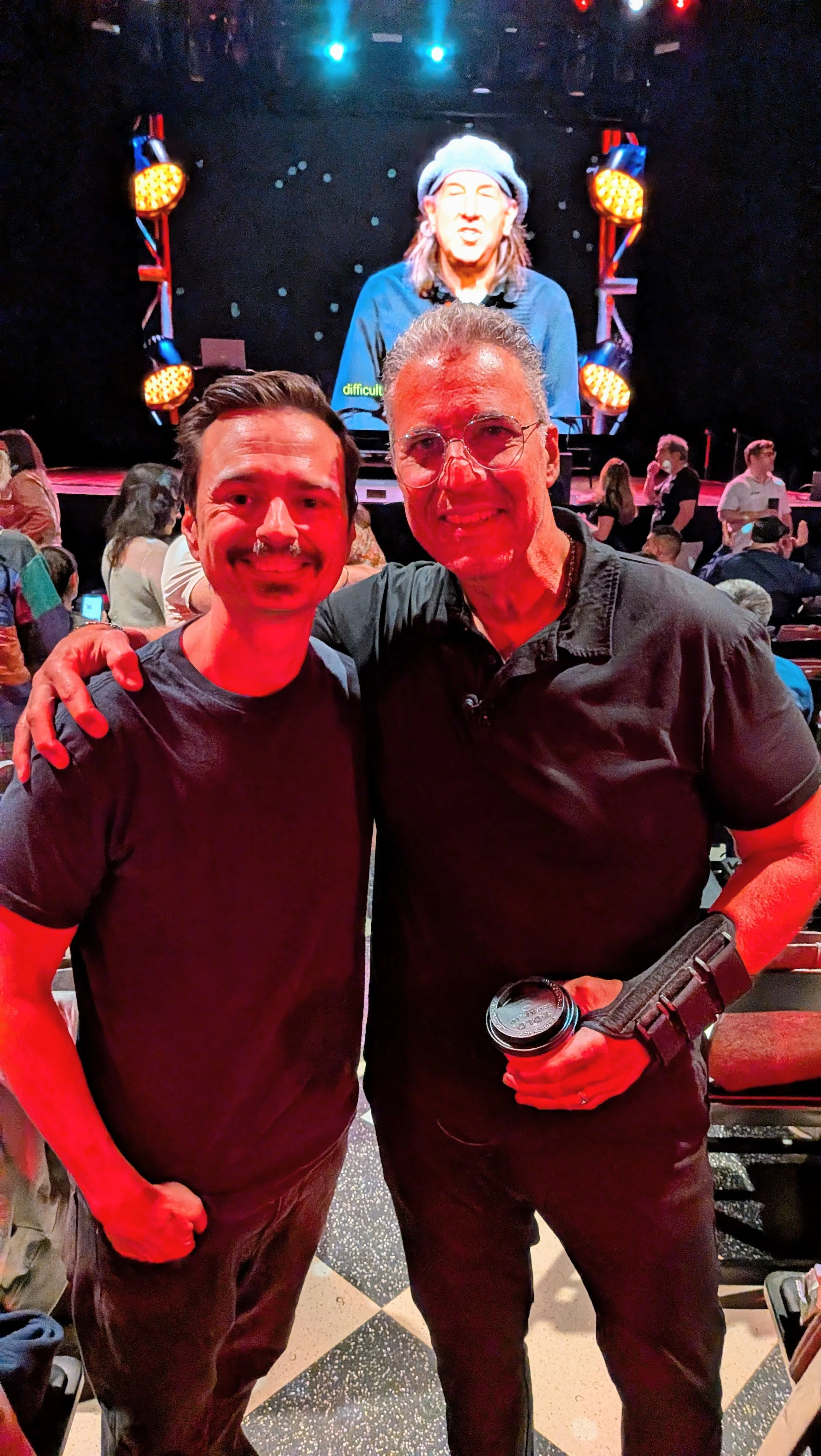
Tony Battista and myself during a Tastylive showing in Los Angeles 2025
I got introduced to investing through an advisor I'd met by chance. I trusted her and followed her recommendations.
But something about it pulled me in. I became curious—almost obsessed—with understanding how money actually worked. That curiosity led me to options trading.
At first, I thought I understood it. I didn't. But I got lucky.
I started making money quickly. Faster than anything I'd experienced before. And for the first time, I knew what it felt like to win financially.
That feeling changes you.
I grew comfortable with big swings—both up and down—because the upside felt limitless. Eventually I realized the advisor managing my money didn't fully understand what I was trying to do. So I took control.
From Learning to Chasing
On my own, I wasn't really investing. I was chasing outcomes.
I made trades based on feel. Sometimes they worked. Those early wins built confidence—but not discipline. When success comes early, it's easy to mistake luck for skill.
My results grew inconsistent. I didn't have a real system—just momentum and the belief that I could figure it out.
The Slow Drift
What I didn't notice at the time was how gradually everything was shifting.
It wasn't one big decision. It was a series of small ones: taking on more risk, holding positions longer than I should, trying to "make it back" after losses, borrowing to stay in the game instead of stepping away.
That's how I ended up carrying debt I never planned for. Not all at once—slowly, almost quietly.
And that's the part no one really talks about. You don't wake up one day and decide to blow up your finances. You justify each move. You tell yourself you're close. You believe the next trade will fix everything.
What It Actually Cost
Back to that hallway.
I could hear people laughing, talking about their weekend plans. Normal stuff. The kind of thing I should have been part of. But I was somewhere else entirely—locked inside a world where only I could feel the highs, and only I had to absorb the lows.
Friends would invite me out. I'd say no, or show up and not really be there. A bad week in the market had a way of making everything else feel pointless.
That's what the chasing actually cost me—not just money, but presence.
I spent years trying to master a system I believed would solve everything. But money was never the problem I needed to solve. The real issue was a lack of direction.
Stepping Back
For the first time in a long time, I had to ask myself honestly: What was I actually chasing?
For years I told myself it was financial freedom. But that wasn't the full truth. I was chasing the feeling of winning—the dopamine, the excitement, the idea that I could accelerate everything if I just figured it out.
What I eventually realized was simpler and harder to admit: I was chasing a life I didn't even want.
I live simply. The things that genuinely matter to me don't require extreme wealth. Yet I was taking on real stress, making decisions under pressure, and drifting further from the life I actually wanted to live.
So I sat with some uncomfortable questions: Why am I rushing this? What am I actually building? If I had more money tomorrow, would anything fundamentally change?
Where I Go From Here
I'm still learning. Still investing. Still figuring it out.
But I'm approaching it differently—more intentional, more disciplined, less driven by the need to win something.
And honestly, I don't regret the path I took to get here.
I went from someone completely risk-averse—someone who felt proud just to have savings—to someone chasing trades and outcomes I wasn't equipped to handle. It took time, but I've settled somewhere in the middle. A place that actually makes sense for who I am and how I want to live.
I wouldn't have found that without making the decisions I made. The wrong ones included.
There's a certain kind of advice that only lands after you've ignored it. You hear it, you nod, and then you go do the thing anyway—because you're convinced your situation is different. Sometimes you need to touch the stove yourself before you truly understand why everyone kept telling you not to.
That's not a failure of intelligence. It's just how some lessons work.
What I know now is that the goal was never a number in an account. It was always about building a life I actually want to show up for—one where money is working quietly in the background, not running the show.
I'm still building that. But for the first time, I know what I'm building toward.
And that changes everything.